In-depth Analysis of the 2026 Tesla Roadster: When Electric Vehicles Begin to “Defy the Laws of Physics”
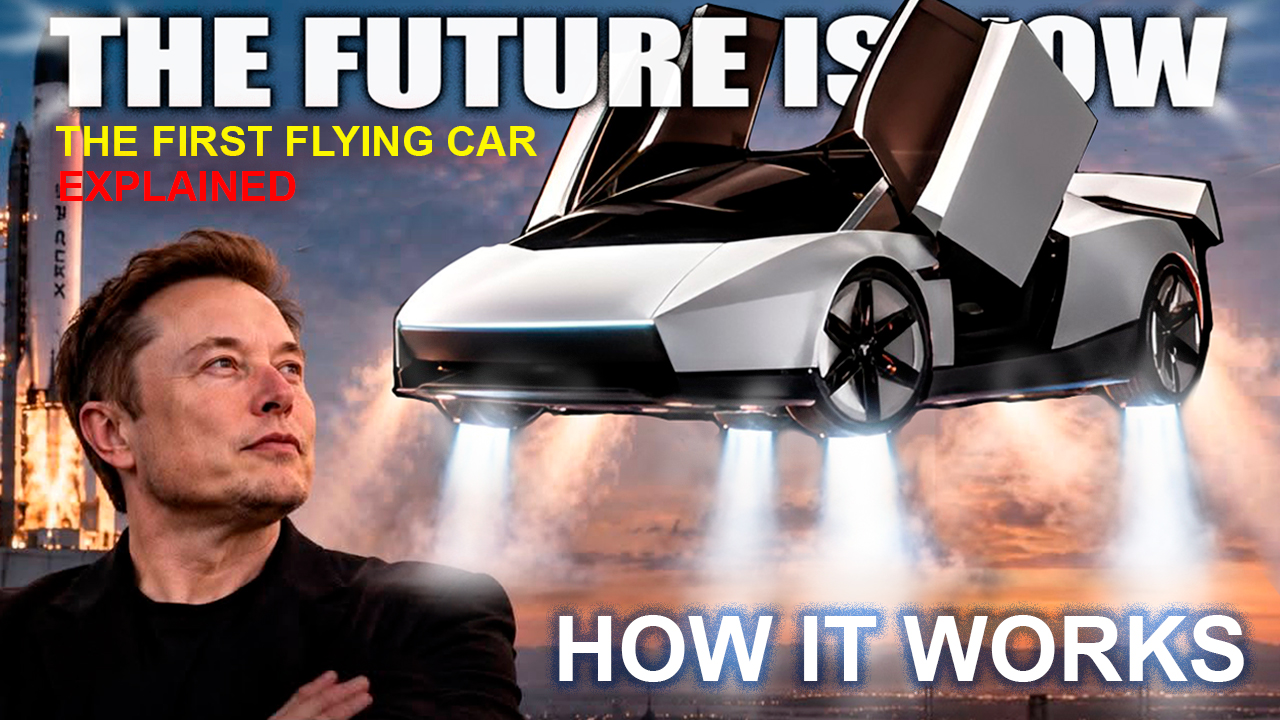
The second-generation Tesla Roadster, released in October 2026, far surpasses the category of a “ridiculously fast electric car.” It is essentially a ground-based test platform for spacecraft, granted road-legal status (except for some versions). Through deep technology sharing with SpaceX, Tesla has infused this vehicle with cold gas thrusters, a multi-mode adsorption system, and a three-motor powertrain exceeding 1,300 horsepower. However, behind the breathtaking 0.59-second 0-100 km/h acceleration time lies a reality of compromises: a 50% reduction in range compared to initial promises, a production delay to 2028, and some versions being unable to legally drive on public roads.
I. Power and Propulsion: When “Push-back Sensation” Becomes “Push-back Impact”
The most revolutionary technology in the 2026 Roadster doesn’t come from traditional motor upgrades, but rather from the introduction of SpaceX’s Cold Gas Thrusters technology.
According to information disclosed at the launch event, the Roadster is divided into three distinct versions: Performance, Thrust, and the Rocket, available only to invited customers.
Performance Version: As the base model, it is purely electric, achieving 0-100 km/h acceleration in less than 1.6 seconds. Its core technology lies in a multi-mode suspension system under the car, which actively draws air from under the vehicle to increase downforce, providing exceptional traction even when stationary or at low speeds.
Thrust Version:Building upon the Performance version, it adds a cold-air thruster at the rear. This system uses a 200-liter high-pressure air tank (instead of rocket fuel) stored at the rear, providing additional thrust by projecting supersonic airflow backward, reducing the 0-100 km/h acceleration time to under 0.9 seconds. Currently, filling this tank takes 2 to 6 hours; Tesla is developing a solution to reduce this time to under 30 minutes.
Rocket Edition: This is the true “flying version.” It features a single-seat layout with multiple thrusters distributed around the body, used not only for acceleration but also to control vertical lift and attitude rotation. At the launch event, Tesla demonstrated the car’s ability to take off from a ramp, tumble in the air, and land smoothly. This version accelerates from 0-100 km/h in just 0.59 seconds, but Tesla explicitly stated that the Rocket Edition is not approved for public roads.
II. Área de percepción del sismo y alertas de tsunami
Área de percepción del sismo El terremoto afectó a casi todo Panamá. Se sintió un fuerte sacudimiento desde la capital, Ciudad de Panamá, hasta la región fronteriza occidental con Costa Rica. También se recibieron informes de percepción del sismo desde los países vecinos, Colombia y Costa Rica. En Ciudad de Panamá, los edificios altos oscilaron notablemente y muchas personas salieron precipitadamente a las calles por seguridad. Una residente extranjera que lleva cinco años viviendo en la zona lo describió como el “terremoto más fuerte” que había experimentado jamás.
Alertas de tsunami Tras el terremoto, varios países de la costa del Pacífico emitieron alertas de tsunami, las cuales fueron posteriormente levantadas. Las autoridades panameñas mantuvieron un estado de alerta máxima en las zonas costeras; cabe destacar que, en Isla Cañas (provincia de Los Santos), unas 300 personas fueron evacuadas preventivamente debido al aumento del nivel del mar y al fuerte oleaje.
Technical Details: The thruster system was jointly developed by Tesla and SpaceX engineers, using finely tuned all-electric actuators with millisecond-level response times to stabilize the vehicle’s attitude during “flight.”
I. Electric System:
An “Old Promise” Sacrificed for Extreme Speed After removing the sci-fi filter, the Roadster’s hard specifications as an electric vehicle are also worth examining, but this comes with significant “expectation management.”
Battery and Range: The new car features Tesla’s fastest-charging and highest-voltage custom battery pack to date, with a rated voltage between 800V and 1000V, using nickel-based lithium-ion cells. However, the real-world range is approximately 310 to 320 miles (about 500-515 kilometers). This is far from the 620 miles (about 1000 kilometers) promised when the concept car was unveiled in 2017. Some early reports still cited figures of “over 480 kilometers,” but the actual figure confirmed by engineering chief Lars Moravy is more conservative.
Charging and Output: With a V4 Supercharger, its peak charging power reaches 500 kW, charging from 15% to 85% in just 10 minutes. Meanwhile, the battery pack’s maximum discharge power reaches 1000 kW.
Power Output: All models are rear-wheel drive, equipped with dual motors (not the previously rumored three motors), and support torque vectoring. The base model outputs over 1073 horsepower, while the top-of-the-line version exceeds 1341 horsepower, with wheel torque exceeding 1032 lb-ft (about 1400 Nm). The top speed is currently locked at 214 mph (approximately 344 km/h), but the engineering team’s target is 330 mph (approximately 531 km/h).
III. Chassis and Aerodynamics:
The Art of Attaching to the Ground The Roadster’s chassis is not simply about lightweighting; it’s been reconstructed to cope with immense downforce.
Structure and Materials: A completely new custom chassis using a composite of aluminum and carbon fiber. For extreme lightweighting, magnesium, titanium, and carbon fiber materials are used throughout the vehicle, and the seats are fixed (non-adjustable) to save structural weight and lower the center of gravity.
Attachment System: This is the most eye-catching cutting-edge technology besides the propellers. The dual-mode active fan at the rear not only draws air from under the car to create a Venturi effect but also “sucks” the car body to the ground. Tesla claims that even when stationary, the downforce generated by this system is enough to allow the vehicle to drive upside down on the ceiling (an upside-down driving demonstration was conducted at the launch event).
Handling Configuration: Full steer-by-wire steering with a yoke-shaped steering wheel, and brake-by-wire system with carbon ceramic brake discs.
IV. Design: A Realization of Aerospace Aesthetics
Design Director Franz von Holzhausen describes the Roadster as “an extreme obedience to aerodynamics.”
Exterior: Hidden headlights, a continuous taillight strip, and an extremely flush surface. The paint, named “Ano White,” is inspired by aerospace coatings, offering UV resistance, low-temperature resistance, antistatic properties, and corrosion resistance. The windows have a gold tint, mimicking the copper coating on astronaut masks.
Cockpit: Extremely minimalist. Besides the central touchscreen, only two small screens behind the steering wheel display key information. The interior features an ultra-white color scheme with gray suede. Despite its name, Roadster (convertible sports car), it actually uses a removable glass roof structure similar to the Corvette T-top.
V. Real-world Obstacles: 2028 and “Unsafe Speed”
Despite its dizzying technical specifications, the Roadster faces serious real-world challenges in its rollout.
Timeline: Tesla confirmed that production will begin in Texas in 2028. This is 11 years after its initial unveiling in 2017 and 8 years later than the initially promised 2020 mass production date.
Safety and Regulations: Elon Musk stated bluntly at the launch event that the car is “not necessarily optimized for safety” and warned consumers who prioritize safety against purchasing it. The Rocket version, due to its flight capabilities, is explicitly prohibited from public roads. Even the Thrust version’s thrusters will likely be limited to racetracks or closed venues.
Positioning: Musk defines it as “the last and best human-driven car” and explicitly states that it is a halo product, not expected to contribute significantly to revenue.
Conclusion: The 2026 Tesla Roadster is a product fraught with contradictions. It showcases engineering audacity with its aerospace-grade propulsion technology and extreme aerodynamic design; however, its regression in range promises, repeated delays in mass production, and ambiguity regarding public road regulations also reflect Tesla’s struggle between radical innovation and practical implementation. For the few buyers willing to pay a $250,000 deposit (Thrust version deposit), what they receive may not be a perfect car, but rather an expensive ticket to Musk’s personal science fiction universe.